Aruba Directory
Aruba Overview

Discovered and claimed for Spain in 1499, Aruba was acquired by the Dutch in 1636. The island's economy has been dominated by three main industries. A 19th century gold rush was followed by prosperity brought on by the opening in 1924 of an oil refinery. The last decades of the 20th century saw a boom in the tourism industry. Aruba seceded from the Netherlands Antilles in 1986 and became a separate, autonomous member of the Kingdom of the Netherlands. Movement toward full independence was halted at Aruba's request in 1990.
Aruba has long, powder-white beaches – Palm Beach and Eagle Beach, 30 yards deep and miles long are considered two of the finest in the Caribbean. Modern hotels, high-rise and low-rise, offer every facility. For nightlife, there’s no shortage of cabarets, cocktail bars and restaurants serving local and world dishes. There are 11 casinos, some of them open day and night.
The island – 20 miles long by six wide, or 32km by 10km – is a magnet for those in search of natural wonders. The waters of Aruba are always warm, usually 75F-78F (25-26C), clear and swarming with life. You’ll see manta rays, barracuda and the rare green moray.
On Aruba’s world-class, 18-hole golf course, designed by Robert Trent Jones II to take full advantage of its rugged natural surroundings, you’ll see wild burros grazing by the fifth hole and burrowing owls perched on top of the small coral caves near the sixth.
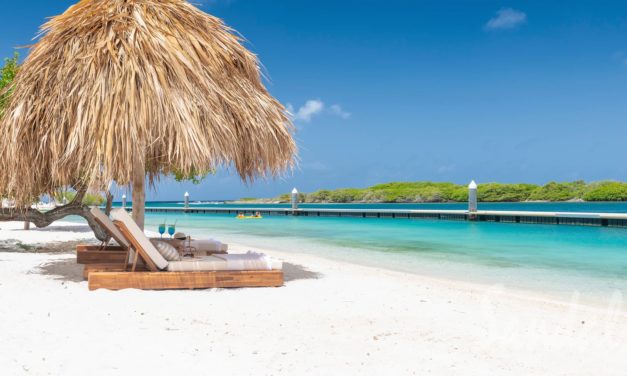
Aruba's beaches consist of white sand and calm waters, each with it's own flavor to suit your taste.
Hadikurari Beach is located just south of the lighthouse near the northwestern tip of Aruba and is known for terrific snorkeling.
Palm Beach is famous for calm waters and is located right in front of the luxurious high-rise hotel stretch of the island.
Eagle Beach is a well-visited public beach for locals, replete with shaded picnic areas and plenty of parking right off the main road. Several low-rise hotels are nearby, just off the street from the beach.
Rodgers Beach features a slightly rough surf. It is located close to the Baby Beach, offering shady areas and shower facilities. It was a popular place for those that worked at the oil refinery and their families.
Baby Beach (QTVR) is located in the area known as Seroe Colorado at the southeastern end of the island. It got its name because the calm and shallow waters make it ideal for children and/or inexperienced swimmers. Snorkelers will enjoy gorgeous coral heads in the channel. 
Aruba is known as an island that caters both to the affluent traveler and to those looking for a more moderately priced vacation. Luxury high rises provide opulent surroundings, excellent service and numerous comforts. Many of the low rise hotels are characterized by a homey feel, gorgeous pools, casual and theme party style dining and splendid service.
For those that want something special, Aruba offers luxurious private properties where you can have complete seclusion and your own private beach. Villas are ideal for groups, especially those with interests in activities such as windsurfing. Aruba is not a large island, and it's very easy to get around. Most visitors will arrive at Queen Beatrix International Airport via charter and scheduled flights. Cruise ships do dock at the island, often used as a starting point for Caribbean cruising.
Although many tourists opt to get around to restaurants and nightclubs by taxi, others have discovered that Aruba's bus system is efficient, easy to use and quite affordable. The bus runs frequently between the main bus station in downtown Oranjestad and the entire hotel strip.
Aruba Facts Population: 71,218
Currency: Aruban guilder/florin (AWG)
Languages: Dutch (official), Papiamento (a Spanish, Portuguese, Dutch, English dialect), English (widely spoken), Spanish
View All Facts |
|